Four Weeks After Multi-Billion Hack, Binance Customers Resume Unrestricted Withdrawals
Crypto Exchanges
Four Weeks After Multi-Billion Hack, Binance Customers Resume Unrestricted Withdrawals
In 4 slidesThe gist of this article, fast
- 01
Four weeks after multi-billion hack, Binance customers resume unrestricted withdrawals
Following the theft of more than six billion dollars in crypto assets, withdrawal systems at the world's largest exchange have returned to normal,…
BLOCK #9 · block9.net - 02
Binance restores withdrawals after four weeks
Normal operations resumed following the 29 October hack. Chief executive Richard Teng earmarked a $6.34bn emergency fund so that no user suffered financial harm.
BLOCK #9 · block9.net - 03
The announcement on social media provides relief…
The announcement on social media provides relief to millions of users worldwide, although the platform immediately added a minor technical caveat.
BLOCK #9 · block9.net - 04
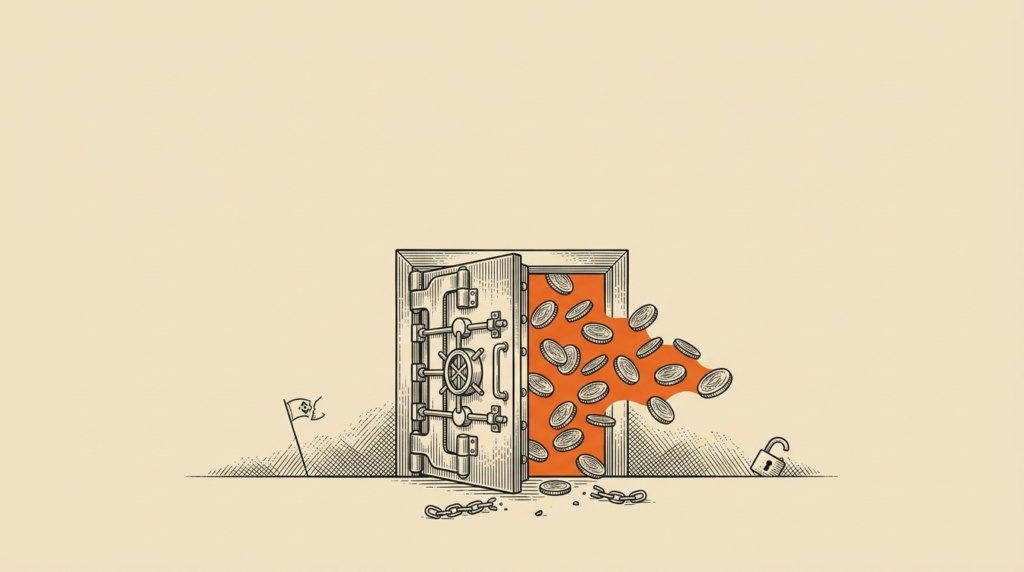
Courts target 26,000 wallets in global dragnet
Abu Dhabi courts granted a $6.5bn freezing injunction covering 26,000 wallets. Even so, attackers routed more than $600m through THORChain to obscure funds.
BLOCK #9 · block9.net
Following the theft of more than six billion dollars in crypto assets, withdrawal systems at the world’s largest exchange have returned to normal, even as the manhunt for the perpetrators intensifies.
For four weeks, a tense crisis atmosphere gripped the control rooms and helpdesks of the world’s largest trading venue. On Thursday, Binance announced that remedial work on its withdrawal systems following late October’s security breach is fully complete, and that clients across virtually all networks can once again access their funds without hindrance. This formally brings an end to the most severe operational state of emergency the crypto firm has ever had to declare, after attackers made off with a record $6.3bn to $6.4bn—equivalent to roughly €5.9bn—on 29 October.
The announcement on social media provides relief to millions of users worldwide, although the platform immediately added a minor technical caveat. A handful of specific blockchain networks remain temporarily unavailable for withdrawals due to scheduled maintenance and network upgrades. According to the exchange, this routine maintenance is entirely unrelated to the resolution of the security incident and affects only a negligible fraction of daily trading volume. For the vast majority of investors, the cash desk is operating just as it did before the attack.
Two-day outage and a flight of billions
To grasp just how extraordinary this four-week recovery period is, one must look back to the critical hours of Thursday 29 October. As soon as the scale of the breach became evident, Binance immediately halted all withdrawals for two full days to stem the outflow of assets. When the digital tellers cautiously reopened in early November, a predictable crisis of confidence ensued. Users rushed to pull out $4.7bn in crypto assets, representing over €4.3bn. That capital flight underscored the widespread anxiety among retail savers and institutional players alike.
To avert outright panic, chief executive Richard Teng had to dig deep into company reserves. Binance earmarked an internal emergency fund of $6.34bn to cover all client losses in full, guaranteeing that no user would suffer financial harm. The exchange continually directed sceptical customers to its public proof-of-reserves statements, where anyone can verify on-chain that all client assets are backed at least one-to-one. Teng stated earlier this month that roughly 95% of the stolen amount had effectively been recovered or secured through operational reserves and frozen assets.
Fake job interviews and artificial intelligence
The investigation into how the breach unfolded paints an alarming picture of modern espionage. According to statements from Binance, the perpetrators gained entry by duping an exchange employee through sophisticated, fabricated job interviews. Artificial intelligence tools were deployed to generate convincing identities and synthesise voices. Once inside, the intruders managed to access internal systems responsible for handling transactions and managing reserves.
To avert outright panic, chief executive Richard Teng had to dig deep into company reserves.
The US Federal Bureau of Investigation (FBI) quickly pointed the finger at North Korea, specifically identifying state-sponsored hackers from the notorious TraderTraitor group. The syndicate is internationally infamous for hijacking billions in crypto assets to channel foreign currency to the heavily sanctioned regime in Pyongyang. The North Korean government denied all involvement through official channels, dismissing the US accusations as a political provocation. Nevertheless, the tactics deployed—ranging from calculated social engineering to the rapid obfuscation of stolen transactions—align seamlessly with the gang’s established playbook.
A global manhunt for six billion dollars
While Binance rebuilt its internal security architecture, an unprecedented legal and financial dragnet was unfolding behind the scenes. Major stablecoin issuers moved quickly to freeze $2.85bn worth of illicit assets on the blockchain. Earlier this week, the US Department of Justice filed a civil forfeiture complaint seeking the permanent confiscation of more than $1.1bn in stolen USD Coin. In total, US authorities report that they have already helped freeze, seize or recover over $2.9bn.
Binance itself brought out legal heavy artillery via the courts of the Abu Dhabi Global Market. Lawyers from Gibson Dunn secured a worldwide freezing injunction worth $6.5bn against the as-yet-unidentified perpetrators. The ruling broke fresh legal ground because the order can be served directly via the blockchain to a dynamic list of over 26,000 suspicious crypto wallets. This places trading platforms worldwide on notice to isolate those addresses under threat of severe sanctions.
Yet a significant portion of the loot continues to slip through the net. Blockchain intelligence firms such as Chainalysis and Elliptic reported that the attackers have already routed more than $600m through THORChain, a decentralised trading protocol that swaps crypto assets across disparate blockchains without a central intermediary. Furthermore, according to Elliptic, at least $342m has flowed through CoinJoin services—technologies that pool transactions from multiple users to deliberately obscure transaction provenance. Analysts estimate that laundering these assets could take months or years; however, even if the perpetrators manage to liquidate only a fraction, it represents a colossal windfall.
Lessons for European and regional investors
For crypto holders across the Benelux and wider Europe, the resolution of this mega-hack carries a dual lesson. On the one hand, the incident demonstrates that a market leader like Binance is financially resilient enough to absorb a $6bn shock without collapsing—a stark contrast to the chaotic insolvencies of exchanges such as FTX in the past. On the other hand, the mandatory four-week withdrawal freeze illustrates the vulnerability of entrusting assets to a centralised counterparty. Investors who do not control their own wallet private keys remain at the mercy of the platform’s corporate decisions and operational recovery capabilities during a crisis.
Binance has also explicitly warned users about the secondary fallout from such incidents. Scammers routinely exploit periods of market unrest to distribute phishing schemes. Investors have been urged to treat with extreme suspicion any emails or messages claiming to expedite withdrawals, offer VIP processing priority or transfer funds into so-called secure vaults. The exchange reiterated that it will never ask for passwords, two-factor authentication codes or seed phrases.
The assault on Binance is by no means an isolated event, reflecting a broader wave of sophisticated cybercrime targeting financial institutions. Custody provider Zodia Custody, owned by Standard Chartered, recently disclosed a data breach involving unauthorised access to client and staff contact details. Even FinCEN, the US Treasury’s financial crimes enforcement bureau, had to take systems offline following a suspected cyber intrusion. It serves as a reminder that the threat landscape is growing increasingly complex alongside advances in AI technology.
Unanswered questions in the wake of the recovery
Binance’s ability to restore standard operations and absorb losses from its balance sheet is a testament to operational resilience. Nevertheless, the fundamental questions left in the wake of this incident warrant scrutiny. Chief among them is the sharpening conflict between regulators and the philosophy of open protocols. When law enforcement agencies call for networks like THORChain to be shut down, they run into an ideological impasse. As the protocol’s co-founder Chad Barraford noted, an estimated 98% of transactions stem from legitimate market participants pursuing financial autonomy. Forcing the network offline penalises those users, while illicit actors simply migrate to alternative shadow routes.
There are also legitimate doubts over whether the international community can ever formulate a watertight response to the systematic looting of centralised exchanges by state-sponsored actors. The market is already pricing these persistent liquidity and systemic risks into valuations. According to proprietary market data from Block #9, recorded on 24 November at 17:29, the benchmark Crypto Fear & Greed Index stood at a chilling 12 out of 100, signalling extreme fear among market participants. Bitcoin was changing hands at €54,415, down 8.0% over seven days and 25.8% over the past month, trading nearly 50% below its all-time high. The broader cryptocurrency market shed 7.1% over 24 hours, shrinking to €1.89tn.
With withdrawals reopened at Binance, market attention turns to how much capital will remain on the platform in the coming days. Will institutional players turn their backs on the exchange in favour of self-custody via hardware wallets, or will the sheer convenience of a centralised marketplace once again outweigh the security risks? The answers will determine whether trust in the sector can mount a sustainable recovery, or if this episode will catalyse far more stringent global oversight of centralised exchanges.
- Binance
- Cyberveiligheid
- diefstal
- fbi
- Noord-Korea
- Richard Teng
- Thorchain
- TraderTraitor
- United States
- Zodia Custody

Written by
Amina El Yazidi
Tax Editor · Brussels (BE)
Expertise
Amina follows tax rules around crypto in the Netherlands and Belgium. She translates fiscal legal texts into practical steps for retail investors.
Related articles
- Justin Yek Takes Financial Helm at Binance After Six-Billion-Euro Cyber Theft
- Seven Swift Transactions Clear Path to Launder €131m in Stolen Binance Funds
- Binance Confirms €5.6 Billion Theft Following Fake Job Interview Attack
- Iranian Hacker Group Threatens 2026 FIFA World Cup: Genuine Threat or Disinformation?
- FBI Has Been Convening Experts for Nine Years to Combat Crypto Crime
- Thorchain Resumes Operations After Security Upgrade: New Integrations Ahead
Stay in the loop
Follow Block #9.
Daily market and equity news in your feed. Follow us on Facebook and Instagram so you never miss an analysis.
By 7 a.m. you already know
Every Monday, Wednesday, Friday and Sunday morning at 07:00, the overview in your inbox.
Practice without real money or test your knowledge?
Read more