
Seven Swift Transactions Clear Path to Launder €131m in Stolen Binance Funds
Crypto Exchanges
Seven Swift Transactions Clear Path to Launder €131m in Stolen Binance Funds
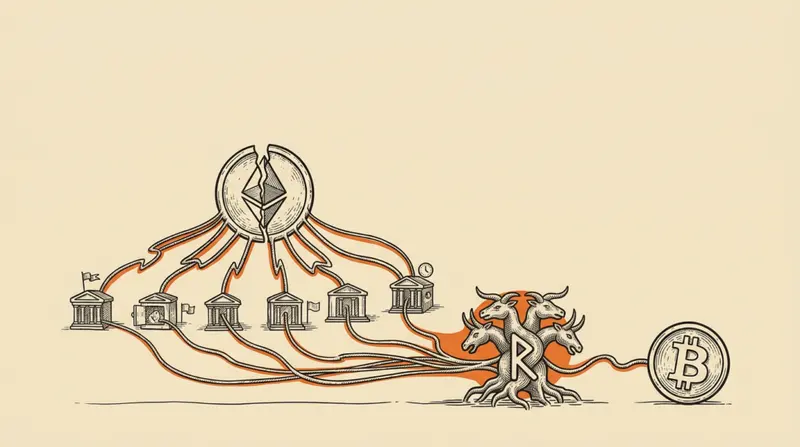
A digital wallet linked to the North Korean breach of Binance has funnelled 78,415 ether across seven transactions, with the trail leading through THORChain into bitcoin.
How do you move more than one hundred million euros in stolen crypto when law enforcement agencies and market regulators worldwide are scrutinising every single transaction? You chop the sum into smaller portions and transfer the loot at breakneck speed to freshly created addresses. In the early hours of 18 November, a crypto wallet directly tied by the US Federal Bureau of Investigation (FBI) to the theft from exchange Binance shifted exactly 78,415 ether. That stash commands a market value of roughly $142 million, representing around €131 million. Rather than moving in one gargantuan transfer, the funds were cleanly divided into seven separate transactions, leaving the sending address practically drained with a remaining balance of less than $20.
Seven transactions to blur the trail
The activity on the Ethereum blockchain unfolded in a remarkably narrow window. Data from blockchain explorer Blockscout reveals that the seven transactions occurred between 02:47 and 02:55 US Eastern time. The sending address, beginning with 0x897, split the bulk of the holdings into six identical tranches of exactly 12,000 ether. Each of these six transfers represented a value of approximately $21.7 million at the time, or roughly €20 million. The remaining fraction of 6,415.24 ether, worth around $11.65 million, left in a seventh transaction bound for a separate destination address prefixed with 0xDbA.
According to blockchain security firm Beosin, six of the receiving addresses were brand new, generated specifically to absorb these transfers. Only one address had previously surfaced in earlier transaction chains tied to the same perpetrator. Draining the primary portfolio reflects a well-worn playbook for professional cybercriminals: by fragmenting funds across unused accounts, they attempt to sidestep the automated alerting systems used by exchanges and data analysts.
Analytics platform Lookonchain noted shortly after the transfers that the attacker was actively attempting to swap the ether into bitcoin. Some nuance is warranted here, however. The seven recorded early-morning transactions were direct wallet-to-wallet transfers within the Ethereum network. This means these specific ether tokens had not yet been formally converted at that moment, although the redistribution was clearly an initial step in the broader money laundering operation.
The escape route through decentralised liquidity pools
The recent transfer is by no means an isolated event. A day earlier, on 17 November, a similar batch of roughly 74,880 ether was shifted from two other wallets that are likewise blacklisted by the FBI. The link between both waves quickly became undeniable: one of the destination addresses from the seven transactions had already received 2,879.66 ether during that previous 17 November tranche.
Analytics platform Lookonchain noted shortly after the transfers that the attacker was actively attempting to swap the ether into bitcoin.
Where the perpetrators proceeded to actual conversion, the THORChain protocol was brought into play. A recipient from the 17 November series routed ether through an intermediary address, which deposited 50 ether into THORChain's Ethereum router at 04:20 US time on 18 November. Data from Midgard, the network's registration system, confirms that this transaction was successfully paired with a payout of approximately 1.3783 bitcoin. An independent entry on the Bitcoin blockchain confirms this amount was indeed delivered to the address specified in the original Ethereum transaction order.
From the attackers' perspective, selecting THORChain was highly deliberate. The protocol allows direct cross-chain swaps without the intervention of a centralised exchange that requires customer records or identity verification. The technology swaps underlying assets through liquidity pools and network vaults. While shifting from ether to bitcoin complicates tracking, it does not yet constitute a final cash-out into tangible dollars or euros on a conventional bank account; the value remains firmly on-chain for the time being.
The legacy of the multi-billion Binance breach
The origins of these funds trace back to one of the largest digital thefts in the history of the crypto industry. In October, the world's largest trading platform, Binance, was hit by a massive cyberattack resulting in the loss of more than $6 billion, or approximately €5.5 billion. Investigators believe the attackers compromised the infrastructure used for digitally signing transactions. According to investigative reports, that critical access was obtained via a compromised laptop belonging to an engineer at the platform.
On 31 October, the FBI issued an urgent advisory officially attributing the massive breach to TraderTraitor, an infamous hacking group operating under the North Korean regime. US authorities explicitly published the associated wallet addresses, including the address that has now offloaded the 78,415 ether. Federal agencies urged operators of THORNodes, instant swap services, and other crypto-financial institutions to immediately block any transaction originating from these addresses.
That warning did not stop the thieves from shifting substantial sums earlier. Analytics firm Arkham established in late October that the attacker had already converted $911 million into ether and Tron. Chainalysis documented concurrently that at least $325 million worth of tokens had been swapped to evade impending freezes by centralised issuers.
To grasp the scale of the holdings, Arkham's ledger provides clear perspective. The wallet cluster that Arkham attributes to the Binance attacker still held approximately 511,437 ether and 18,407.54 bitcoin as of 05:20 on 18 November. In other words, the batch of 78,415 ether now in motion represents roughly 15 per cent of the remaining ether stash kept in these connected addresses. This demonstrates that the vast majority of the loot remains untouched, awaiting a moment of lower vigilance.
What the selling pressure means for European investors
The ongoing movement of capital from these illicit wallets casts a shadow across the broader market, a headwind felt by investors in Belgium and the Netherlands as well. Market data from Block #9, recorded on 18 November at 12:01 Brussels time, shows ether trading at €1,645. While this represents a modest 24-hour rebound of 1.0 per cent, the token is down 12.2 per cent over a seven-day period. Over thirty days, losses stand at 25.9 per cent, leaving the price languishing 61 per cent below its all-time high. Meanwhile, the crypto fear and greed index stands at a chilling 11 out of 100, signalling extreme fear among market participants.
With hundreds of thousands of ether controlled by bad actors who care little about the final exit price, worries over potential dumping pressure remain persistent. Retail investors in the European Union also face regulatory realities. Under the supervision of regulators such as Belgium's FSMA and the Dutch financial markets authority (AFM), and reinforced by European MiCA regulation, regulated exchanges enforce stringent compliance protocols. Anyone inadvertently receiving crypto tokens tainted by these illicit fund flows risks having their account temporarily frozen pending forensic review.
Blocking without a kill switch: an unresolved dilemma
The Binance theft highlights the fundamental friction between financial oversight and the decentralised architecture of blockchain technology. While traditional banks can freeze suspect accounts with a single keystroke following a court order, a protocol like THORChain has no corporate headquarters for a bailiff to visit. Although the FBI requested individual node operators to filter out illicit transactions, as long as independent nodes across the globe do not implement identical filtering rules, transactions will simply continue to clear.
It remains highly doubtful whether decentralised liquidity protocols lacking a mandatory central sanctions switch can effectively curb the outflow of such colossal thefts, especially while individual node operators are dispersed worldwide and decide on their software settings autonomously. What is clear is that TraderTraitor is actively exploiting this structural loophole to systematically convert its loot into bitcoin. At the same time, it remains an open question how the perpetrators will ever convert that enormous hoard of more than 18,000 bitcoin into spendable fiat currency or bank deposits without tripping the heightened surveillance nets of international law enforcement.
- Arkham
- Beosin
- Binance
- bitcoin
- cybercrime
- Ethereum
- fbi
- lookonchain
- Thorchain
- TraderTraitor

Written by
Amina El Yazidi
Tax Editor · Brussels (BE)
Expertise
Amina follows tax rules around crypto in the Netherlands and Belgium. She translates fiscal legal texts into practical steps for retail investors.
Related articles
- Binance Confirms €5.6 Billion Theft Following Fake Job Interview Attack
- Elliptic Tracks Binance Hackers Swapping €46 Million in Stolen XRP for Bitcoin
- US Judge Approves Seizure of €1.1 Billion from Binance Hack
- Bitcoin Wallet Moves Nearly €378 Million in Coins After Six Years of Inactivity
- Crypto Crime: Arrest Highlights Growing Threat of Malware in Gaming
- Researcher Specter Links Ethereum Inflows to ProveX with Richard Heart
Stay in the loop
Follow Block #9.
Daily market and equity news in your feed. Follow us on Facebook and Instagram so you never miss an analysis.
By 7 a.m. you already know
Every Monday, Wednesday, Friday and Sunday morning at 07:00, the overview in your inbox.
Practice without real money or test your knowledge?
Read more
Other interesting articles

CFTC Approves Backpack, Granting Trading Platform Access to US Derivatives Market
- 02Major Banks Now Settle Bonds Round the Clock on Digital Network in Hong Kong

- 03Where Analysts Expected Profit, Henry Boot Suddenly Plunges Millions into the Red

- 04Ethereum Chooses Tried-and-Tested Security While Everyone Expected Faster Quantum Hashes

- 05Brussels Scales Up to €50 Billion for Quantum Technology and Artificial Intelligence
