Flemish Municipalities Granted One-Year Extension to EU Cyber Defence Shield
Block #9
Flemish Municipalities Granted One-Year Extension to EU Cyber Defence Shield
In 4 slidesThe gist of this article, fast
- 01
Flemish municipalities granted one-year extension to EU cyber defence shield
A European support programme funding emergency systems for 21 local authorities was close to expiry.
BLOCK #9 · block9.net - 02
EU extends cyber defence shield
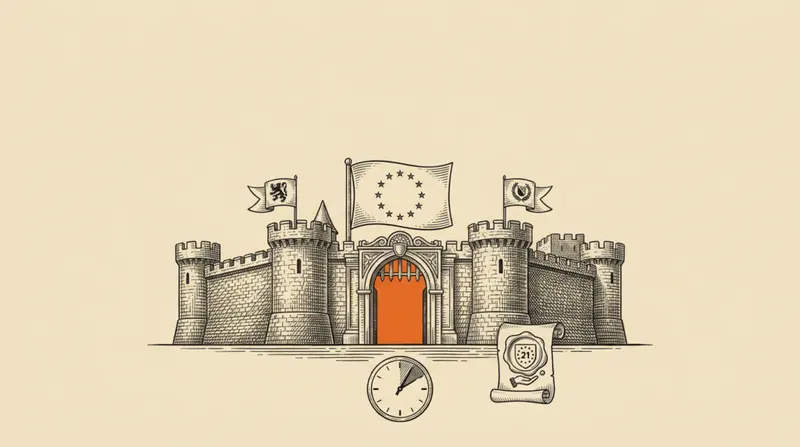
A 12-month deferral gives 21 Flemish municipalities across two provinces continued access to emergency backup systems until the end of next year.
BLOCK #9 · block9.net - 03
Deputy warned of tight rollout schedules
East Flanders Deputy Joke Schauvliege warned European officials that the initial December deadline was too tight for municipal staff.
BLOCK #9 · block9.net - 04
Hackers strike 1.2 million Flemish records
Just days before the decision, the GH group compromised records of 1.2 million Flemish citizens in an attack on a utility company.
BLOCK #9 · block9.net
A European support programme funding emergency systems for 21 local authorities was close to expiry. A 12-month extension aims to prevent councils from being unable to issue driving licences or certificates following a cyberattack.
The European Union has approved an extension of the regional cybersecurity programme for local authorities, after the initial December deadline proved too tight financially and operationally to achieve a secure rollout. Without this formal approval, the technical framework underpinning digital emergency backup systems risked an abrupt halt at the end of the year. The deferral grants 21 Flemish municipalities across two provinces continued access until the end of next year to a centralised emergency infrastructure designed to keep municipal services running when ransomware cripples local servers.
The project addresses the acute vulnerability of smaller administrative bodies that lack the financial resources or IT personnel to fund a fully redundant emergency environment independently. In East Flanders, 15 authorities are participating in the scheme: Assenede, Denderleeuw, Eeklo, Erpe-Mere, Hamme, Herzele, Lebbeke, Lochristi, Maldegem, Oudenaarde, Ronse, Temse, Wichelen, Zelzate and Zwalm. In Flemish Brabant, six authorities have signed up: Bertem, Glabbeek, Haacht, Keerbergen, Scherpenheuvel-Zichem and Steenokkerzeel. Together, they represent hundreds of thousands of residents whose personal data and official files rely on this framework for continued protection.
The practical focus of the programme centres on front-desk continuity. If ransomware encrypts internal files, the local administration can fail over to an isolated backup environment. This mechanism prevents local authorities from being paralysed for days regarding vital records. As a result, residents can continue applying for urgent identity cards, passports or driving licences even during an active attack—documents that conventionally require an active link to the National Register and federal databases.
Breathing Space for Councils with Tight IT Budgets
The request for an extension was no coincidence. Provincial Deputy Joke Schauvliege (CD&V), responsible for supporting local authorities within the East Flanders provincial administration, sounded the alarm with European officials. Implementing comprehensive data replication, configuring segregated networks and training staff require considerably more lead time than policymakers behind desks often anticipate. The EU answered the call and pushed back the deadline, sparing the participating administrations from being left stranded midway through a digital transition.
The risk was that councils would be forced to fall back on outdated, vulnerable systems once the initial grant term lapsed. Local authorities face tight budgetary constraints and a structural shortage of specialised IT professionals in the labour market. We see this European breathing space primarily as an exposure of the structural inability of individual town and village councils to keep pace with professional criminal syndicates on their own. A 12-month extension will not resolve that fundamental issue of staffing and scale, but it does prevent security gaps from remaining wide open while policy memos are still circulating.
Implementing comprehensive data replication, configuring segregated networks and training staff require considerably more lead time than policymakers behind desks often anticipate.
East Flanders has long positioned itself as a hub for intermunicipal security initiatives. The provincial government has confirmed it intends to continue offering its operational expertise to participating towns and municipalities even after the European funding cycle concludes. The methodology developed around redundant data storage is intended ultimately to serve as a blueprint for the entire province, with lessons learned from the 21 pilot municipalities acting as a test case for broader deployment.
Bespoke Support and Fire Drills Against Digital Extortion
Not every local authority is taking part in the same framework. Outside the EU grant programme, a further 13 East Flemish municipalities have signed separate, bilateral agreements with provincial services: Aalst, Aalter, Beveren-Kruibeke-Zwijndrecht, Buggenhout, Geraardsbergen, Haaltert, Lierde, Merelbeke-Melle, Ninove, Oosterzele, Sint-Lievens-Houtem, Zele and Zulte. Six regional emergency rescue zones have also joined directly: HVZ Meetjesland, HVZ Centrum, HVZ Oost, HVZ Waasland, HVZ Zuid-Oost and HVZ Vlaamse Ardennen.
These bilateral tracks go beyond mere server capacity, focusing on practical preparedness through concrete emergency scenarios and crisis simulations. The province applies several core operational principles:
- Contingency planning: Developing a playbook detailing, down to the quarter-hour, who takes which decisions once ransomware disables computer systems.
- Crisis simulations: Practical drills confronting administrative staff and municipal executives with a simulated extortion attack to test response times and communication protocols.
- Data security: Rapid isolation of vital civil registries to prevent citizen data from being leaked publicly or irrevocably erased.
- At-cost pricing: The province invoices its support at cost, with participants covering only actual staff hours with no public-sector profit margin added.
This at-cost model represents a deliberate alternative to the commercial cybersecurity market. Private consultancies routinely charge hourly rates that smaller rural councils find unaffordable, which historically prompted these authorities to postpone security audits. At the same time, local authorities remain free to procure protection elsewhere; several councils deliberately opt for private vendors or specialised public-utility IT groupings.
The Chain Fractures at the Intermunicipal Level
The urgency of the initiative is underscored by recent security incidents across Flanders. Only days before the project extension was announced, cybercriminals from the GH group managed to compromise the data of 1.2 million Flemish citizens through a successful breach of intermunicipal utility companies. Incidents of this kind demonstrate that the public sector's digital chain is only as strong as its weakest link. A municipality may secure its own administrative perimeter flawlessly, but if the utility handling its waste management or sewerage systems is breached, residents' addresses and national identification numbers are still exposed.
The province of East Flanders has therefore explicitly opened the door for affected or concerned intermunicipal utilities to join its security initiatives. While cities such as Antwerp have previously suffered millions of euros in damage following destructive ransomware incidents, the recent utility data leak illustrates that attackers are shifting focus toward entities operating just outside the purview of national security agencies.
At EU level, this local project fits into a broader strategy to bolster the digital resilience of public administrations. Through programmes such as the European Digital Infrastructure Consortium (EDIC), the European Union promotes the collective deployment of cross-border and regional IT infrastructure. While large-scale consortia such as EUROPEUM-EDIC focus on umbrella architectures for digital identity and blockchain infrastructure under the Digital Decade 2030 framework, practical experience in Flanders demonstrates that foundational digital resilience begins with robust, everyday data replication in town halls like Assenede or Scherpenheuvel-Zichem.
What Follows the Transition Period After 2025?
For residents of the 21 participating municipalities, the decision ensures that in-person public services retain a sturdier safety net over the next 12 months. Should an attacker breach systems in Glabbeek or Denderleeuw, the emergency protocol guarantees front desks will not be shuttered for weeks. Citizens will still be able to renew identity cards and request civil certificates, precisely because mission-critical databases are no longer reliant on a single vulnerable local server.
Nevertheless, we view the post-2025 landscape with a degree of caution. An extension of European emergency funding offers short-term relief, but merely postpones an unavoidable question: how will these local authorities cover costs once the European Union definitively turns off the taps? Provincial expertise delivered at cost provides a welcome buffer, but local councillors will need to ring-fence structural cybersecurity budgets in their multi-year plans. Cybercriminals do not work to project deadlines; their attack vectors evolve constantly, irrespective of EU subsidy schedules.
- Cyberveiligheid
- datalek
- EDIC
- European Union
- Intercommunales
- Joke Schauvliege
- Lokale Besturen
- Oost-Vlaanderen
- ransomware
- Vlaams-Brabant

Written by
Bram Hoekstra
Security Editor · Eindhoven (NL)
Expertise
Bram tests wallets, hardware devices, and self-custody setups. He writes about phishing, scams, and how to securely manage your keys.
Related articles
- Leaked helpdesk data puts Coinone crypto exchange users in scammers' crosshairs
- Russian Ransomware Group The Gentlemen Claims 1,000 Victims in Single Year
- Brussels Scales Up to €50 Billion for Quantum Technology and Artificial Intelligence
- Flink Hackers Yet To Receive Ethereum After Ultimatum To Customers And Employees
- Bithumb Hit by Cyberattack as Personal Data Leaks Across South Korean Exchanges
- Volunteers Pay Hundreds in Postage, but Bpost Fails to Deliver Invitations
Stay in the loop
Follow Block #9.
Daily market and equity news in your feed. Follow us on Facebook and Instagram so you never miss an analysis.
Practice without real money or test your knowledge?
Read more