Turkey Restarts Controversial Çöpler Gold Mine After Two-Year Halt
Gold, Silver & Platinum
Turkey Restarts Controversial Çöpler Gold Mine After Two-Year Halt
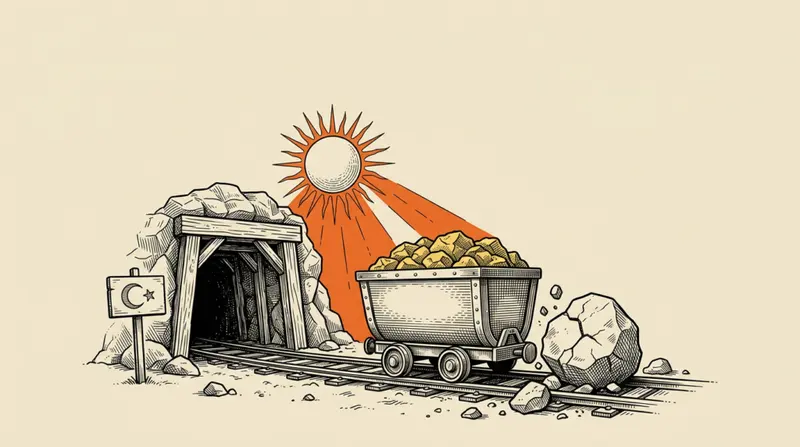
In 4 slidesThe gist of this article, fast
- 01
Turkey restarts controversial Çöpler gold mine after two-year halt
Following the fatal 2024 landslide, the Çöpler mine is processing stockpiles once again as Ankara moves to bolster domestic gold supplies.
BLOCK #9 · block9.net - 02
Çöpler mine restarts after fatal landslide
Anagold Madencilik quietly resumed processing stockpiled ore under a temporary licence, targeting 1.3 tonnes of gold by year-end.
BLOCK #9 · block9.net - 03
Disaster on 13 February 2024 killed nine
A heap leach pad collapse sent roughly 10 million cubic metres of chemically treated rock down a slope in Erzincan province.
BLOCK #9 · block9.net - 04
SSR Mining sold its 80 per cent stake
Following the disaster, Turkish conglomerate Cengiz Holding acquired the majority share for $1.5 billion.
BLOCK #9 · block9.net
Following the fatal 2024 landslide, the Çöpler mine is processing stockpiles once again as Ankara moves to bolster domestic gold supplies.
Can a gold mine where nine workers lost their lives in a massive landslide simply reopen its doors? In eastern Turkey, the answer is yes: the Çöpler gold mine has resumed operations. Operator Anagold Madencilik quietly began processing stockpiled ore at the site's pressure oxidation plant during the third quarter. The company is operating under a temporary operating licence issued by the Turkish government. By the end of the year, the operator is targeting an initial output of around 1.3 tonnes of gold. The development only came to light following reporting by news agency Bloomberg, as both the authorities and the operator deliberately kept the restart out of the public eye.
The restart of a sidelined gold powerhouse
Çöpler's return marks a significant moment for the Middle Eastern commodities sector. Prior to the fatal disaster, the complex produced roughly 6.9 tonnes of gold annually. That single site accounted for approximately 20 per cent of Turkey's total gold output in 2023. The suspension of operations dealt a heavy blow to the national statistics of a country grappling with massive structural demand for physical precious metals.
The restart is nevertheless proceeding on a cautious, scaled-down basis. Rather than excavating fresh rock strata or immediately resuming controversial heap leaching, work is currently restricted to processing previously mined ore stockpiles waiting by the oxidation plant. This phased approach is intended to verify that the facilities function properly from a technical standpoint without instantly reintroducing identical safety risks. Targeting 1.3 tonnes by year-end, the complex is currently running at a fraction of its former capacity. It underscores that the road to fully restoring extraction remains long and fraught with red tape.
What went wrong on that fatal February day in 2024
To grasp why this restart is so sensitive, one must look back to 13 February 2024. That afternoon, the mine's colossal heap leach pad in Erzincan province collapsed. Roughly 10 million cubic metres of chemically treated rock slid down a 200-metre slope, burying nine workers beneath mud and rubble. It took months of intensive recovery operations before the victims' bodies could be retrieved.
The disaster triggered immediate public outcry and severe political pressure. The relevant supervisory authority promptly revoked the environmental permits held by then-majority owner SSR Mining, a US-headquartered group. The government also demanded that the mining firm bear the full brunt of the soaring remediation costs. An independent technical inquiry subsequently identified a structural design flaw by a third-party contractor: the calculated shear strength of the liner system beneath the leach pad had been heavily overestimated.
To grasp why this restart is so sensitive, one must look back to 13 February 2024.
The tragedy was not the site's first incident. In June 2022, the Turkish Ministry of Environment temporarily halted the mine following a leak of cyanide-laced wastewater. During the 2024 disaster, panic quickly erupted over potential contamination of the nearby Euphrates River, a vital lifeline for millions across Turkey, Syria and Iraq. Although official water testing reported by state news agency Anadolu Agency detected no dangerous cyanide concentrations, the event severely eroded local trust. The judiciary has also acted: a criminal trial against 43 individuals charged with death by negligence remains ongoing in court.
Ownership shift and Ankara's geopolitical hunger for gold
The fallout from the accident triggered a sweeping shift in the mine's ownership. Listed miner SSR Mining drew its conclusions from the protracted regulatory quagmire and reputational fallout. The North American group sold its 80 per cent stake in the mine for $1.5 billion, or around €1.4 billion, to Turkish conglomerate Cengiz Holding. The remaining 20 per cent is retained by Lidya Madencilik Sanayi ve Ticaret AS, bringing the operation almost entirely under domestic control.
For the government in Ankara, renewed production comes not a moment too soon. Turkey is pursuing a resolute policy to boost domestic gold mining and curb dependence on foreign imports. Precious metals now account for more than 60 per cent of the Turkish central bank's total reserves. Addressing parliament recently, Turkish Minister of Energy and Natural Resources Alparslan Bayraktar laid out an ambitious objective of eventually reaching annual domestic gold production of 100 tonnes, though he set no firm deadline.
Compared to other major gold-producing nations, Turkey is decidedly leaning into economic nationalism over strategic raw materials. Whereas Western mining majors elsewhere face strict ESG mandates from institutional shareholders, here a domestic conglomerate with close state ties has taken the helm to resume output as swiftly as possible. In Turkish policy, the drive towards monetary self-reliance and gold reserves systematically takes precedence over past environmental objections.
Implications for European commodity markets and investors
For Belgian and Dutch investors in precious metals, a restart in Turkey might seem remote at first glance, but the underlying dynamics certainly touch the international gold market. Turkey has ranked for years among the world's largest consumers and importers of gold bars and jewellery. Citizens traditionally seek shelter in physical gold in vast numbers to protect their savings against persistent inflation and the structural depreciation of the Turkish lira.
Every kilogram of gold Turkey extracts domestically is one less kilogram it needs to purchase on the open trading markets in London or Switzerland. When a heavyweight asset like Çöpler gradually works its way back towards its previous run rate of nearly seven tonnes annually, it eases physical demand pressure in the international over-the-counter market. European fund managers and retail savers holding gold bullion or ETFs may observe that physical availability at refiners eases marginally as a result, though global demand from central banks remains the dominant price driver.
At the same time, the Çöpler saga serves as a clear warning for European investors in listed mining equities. SSR Mining's sudden exit illustrates just how rapidly operating licences in emerging markets can evaporate following an environmental disaster. Political risk and environmental clean-up costs can torpedo a seemingly lucrative asset in a matter of weeks.
What we are watching in the months ahead
Anagold Madencilik's temporary operating licence is by no means an open-ended pass. The supervisory authority will keep a close eye on the performance of the oxidation facility and watch for any signs of ground instability across the remediated slopes during the winter months. In our view, the mine will only be genuinely out of the danger zone once criminal proceedings against the 43 defendants conclude and definitive environmental impact assessments greenlight renewed extraction.
Furthermore, the key question remains how quickly Cengiz Holding can ramp up from the current 1.3 tonnes towards peak historical capacity. Without controversial heap leaching, returning to seven tonnes a year is technically demanding and exceptionally capital-intensive. We will be tracking forthcoming quarterly updates closely, as the success of this project will help determine whether Ankara can ever turn its 100-tonne domestic gold ambitions into reality.
- Alparslan Bayraktar
- Anagold Madencilik
- Cengiz Holding
- Çöpler
- gold
- Commodities
- Lidya Madencilik
- mining
- SSR Mining
- turkije

Written by
Sanne Vermeulen
Market editor · Amsterdam (NL)
Expertise
Sanne monitors crypto markets, ETF flows, and institutional inflows in Europe. She previously wrote about capital markets and translates market data into understandable stories.
Related articles
- Ivory Coast Sees Gold Mining Accelerate With New €1.1 Billion Mine
- Regis Resources Halts Gold Mining Following Fatal Incident in Western Australia
- Commodity Traders Swoop on Venezuelan Mines as Giants Hesitate
- SSR Mining Pays €427 Million for Roxmore Resources, Extends Gold Mine Life
- Turkish BIST 100 Closes Nearly One Percent Higher After Trading Day
- Centerra Gold Aims to Self-Finance Mine Growth and Restart Molybdenum Production by 2027
Stay in the loop
Follow Block #9.
Daily market and equity news in your feed. Follow us on Facebook and Instagram so you never miss an analysis.
By 7 a.m. you already know
Every Monday, Wednesday, Friday and Sunday morning at 07:00, the overview in your inbox.
Practice without real money or test your knowledge?
Read more
Other interesting articles

Imperial Brands Could Change Hands as Altria Explores Takeover Bid
- 02Researcher Abubakar Sadiq Ismail Reveals How a 30-Cent Payment Can Expose Your IP Address

- 03Abu Dhabi Freezes Over €6 Billion in Assets Following Binance Theft
- 04Deribit Sees Puts Dominate as €6.2 Billion Options Expiry Looms

- 05OKXICE Logs Over Eight Million Euros in Three Days on US Securities Market