Bank of Japan Demands Strict Reserve Rules to Anchor Stablecoins to Sovereign Currency
Crypto News
Bank of Japan Demands Strict Reserve Rules to Anchor Stablecoins to Sovereign Currency
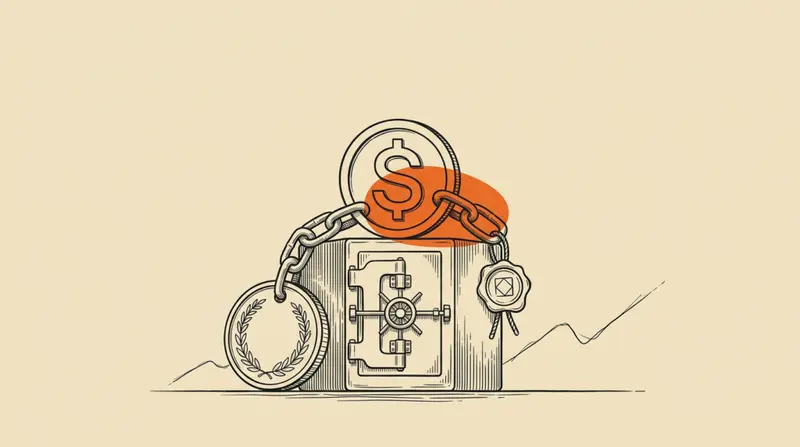
In 4 slidesThe gist of this article, fast
- 01
Bank of Japan demands strict reserve rules to anchor stablecoins to sovereign currency
Anyone relying on the security of digital private money must be able to trust genuine reserves and a firm link to central bank money, Tokyo warns.
BLOCK #9 · block9.net - 02
Central banks demand direct backing for tokens
Kazushige Kamiyama warned that unanchored stablecoins threaten monetary unity. Without mandatory reserves, redemption pegs will eventually crack.
BLOCK #9 · block9.net - 03
Japan limits issuance to licensed lenders
Following its June 2023 legal overhaul, Japan restricts yen stablecoin issuance strictly to banks, trust firms, and registered transfer services.
BLOCK #9 · block9.net - 04
Regional group targets payment rules by 2027
Under the ASEAN+3 initiative, Asian nations are building harmonised standards through 2027 to prevent weak foreign tokens from disrupting payment networks.
BLOCK #9 · block9.net
Anyone relying on the security of digital private money must be able to trust genuine reserves and a firm link to central bank money, Tokyo warns.
What happens to your savings and payments when private digital money suddenly turns out not to be seamlessly exchangeable for sovereign currency? According to Kazushige Kamiyama, executive director at the Bank of Japan, the entire monetary foundation begins to wobble. Speaking at an International Monetary Fund seminar in Tokyo, Kamiyama warned that the rise of stablecoins and tokenised bank deposits demands stringent reserve requirements and an unconditional link to central bank money. Without such regulatory firewalls, the financial landscape risks splintering into disconnected, dysfunctional monetary circuits.
The fragile equilibrium of monetary unity
At the core of Kamiyama’s argument lies an economic principle described by the Bank for International Settlements as the singleness of money. This concept dictates that every euro, dollar or yen within an economy must always represent identical purchasing power, regardless of the specific form that money takes. Whether it concerns physical banknotes in a wallet, an electronic balance at a commercial bank, or a digital token on a blockchain network: exchangeability at equal face value must remain absolute and irrevocable.
According to the Japanese central banker, acute friction arises the moment stablecoin issuers are permitted to determine their own backing models. When underlying reserves consist of less liquid assets or volatile commercial paper, market turbulence inevitably sparks doubts regarding redemption. Holders of such private money only discover the shortfall when the peg breaks and a token can no longer be redeemed for exactly one unit of legal tender. To pre-empt such fragmentation, Kamiyama argues that legislators must define precisely how and where reserves are held, ideally anchored directly on the balance sheets of central banks.
Tokyo’s concern does not emerge in a vacuum. As the global digital asset market continues to expand, supervisory authorities note that private tokens increasingly form the bridge between traditional finance and public blockchains. The necessity of a sturdy foundation is underscored by volatile market conditions: according to Block #9 data recorded on 24 November at 17:29, total crypto market capitalisation stood at 1.89 trillion euros, down 7.1 per cent over 24 hours, while the Fear & Greed Index signalled deep anxiety at a reading of 12 out of 100. Compared to peak historical periods when hundreds of billions in unregulated leverage circulated unchecked, today’s market value of 1.89 trillion euros confirms that digital money has become an enduring force that regulators can no longer treat as a marginal experiment.
Why tokenised deposits are reshaping banking
Kamiyama’s assessment was not limited to prominent stablecoins issued by crypto firms. The director explicitly highlighted tokenised deposits, an innovation whereby established commercial banks convert traditional customer deposits into tradeable on-chain tokens. Banks view this mechanism as an avenue to settle payments and securities transactions 24 hours a day without settlement delays. For institutional and corporate clients, the primary advantage lies in near-instant execution, bypassing the conventional settlement cycles of interbank clearing systems.
Yet this evolution introduces considerable systemic risk to broader financial stability. If major banks each launch proprietary tokenised reserves across disparate technological architectures, a fragmented patchwork of walled gardens will emerge. Clients might transfer funds seamlessly within a single banking environment, only to face friction as soon as payments need to cross over to a competing institution. Kamiyama stressed that interoperability across financial institutions must remain safeguarded through central bank settlement systems, which have served as the ultimate monetary referee for decades.
Kamiyama’s assessment was not limited to prominent stablecoins issued by crypto firms.
Conversely, financial innovation proponents raise a valid counterargument: excessively rigid reserve constraints risk choking the real economy. If a commercial bank or issuer is required to park every tokenised yen or euro in zero-yielding central bank accounts, its capacity to extend productive credit into the economy diminishes. That dynamic could constrain lending to businesses and households. Even so, policymakers in Tokyo insist that operational efficiency must never compromise the fundamental integrity and reliability of the currency.
Asian collaboration on cross-border payments
The Bank of Japan’s stance is not an isolated initiative, but part of a wider regional policy framework. Under the ASEAN+3 initiative—which links Southeast Asian nations with Japan, China, and South Korea—a dedicated working group was established to formulate harmonised standards for cross-border payments and stablecoin oversight through 2027. Tokyo is actively seeking a leadership role, advocating stringent regulatory benchmarks to prevent loosely supervised foreign tokens from destabilising domestic payment rails.
Japan already holds a considerable head start in rulemaking. Following earlier exchange collapses, the country overhauled its Payment Services Act in June 2023. Since then, only licensed banks, registered money transfer services, and trust institutions are permitted to issue stablecoins pegged to the Japanese yen. The statutory requirement that backing reserves consist entirely of safe government bonds or bank deposits was initially seen as burdensome by the industry. Kamiyama’s latest remarks make clear that the central bank has no intention of loosening those reins.
European observers will recognise clear parallels with their own jurisdiction. With the implementation of the MiCA (Markets in Crypto-Assets) regime, the European Union established a comparable regulatory ring-fence around e-money tokens and asset-referenced tokens. Issuers operating in Europe must hold a substantial portion of their reserves in secure, highly liquid instruments and provide token holders with an unconditional right of redemption at par at all times. The Bank of Japan’s statements confirm that leading industrial powers are forming a united front: the era of lightly supervised experimentation with digital private money is over.
What this means for European savers and investors
For private users and institutional investors across Europe, a regulatory address in Tokyo might seem distant, but the structural ramifications extend far beyond Japan. The debate goes to the heart of which digital dollar or euro tokens will remain viable for cross-border commerce and wealth preservation over the long term. As central banks worldwide restrict access to primary settlement facilities to heavily regulated entities, unregulated stablecoins will inevitably be pushed to the fringes of the global financial architecture.
For savers seeking yield on dollar- or euro-denominated stablecoins via crypto platforms, this shift fundamentally alters the risk profile. The market is dividing into two distinct classes:
- Regulated money: tokens issued under the supervision of authorised credit institutions backed by segregated, guaranteed reserves, conferring a direct legal claim on the holder.
- Synthetic private instruments: unregulated assets that promise price parity, but lack statutory access to central bank liquidity facilities and safety nets.
Capital holders will notice that European banks are becoming increasingly cautious about handling inflows originating from unlicensed crypto exchanges. Central banks globally are consolidating control over the monetary system just as tokenised assets transition from a crypto niche into mainstream corporate finance. Preserving the singleness of money serves as a legitimate institutional defence to protect the public monopoly on money creation.
Our assessment of what lies ahead
Kamiyama’s address targets the central tension within financial modernisation. The ambition to make settlement faster and cheaper via distributed ledger networks is colliding directly with age-old requirements of systemic stability. The Bank of Japan is signalling that technological innovation is only welcome if the underlying financial risks are not externalised onto end users or taxpayers.
Over the coming years, we expect to see accelerated convergence between private stablecoins and central bank digital currencies (CBDCs). While commercial lenders attempt to defend market share through tokenised deposits, supervisory authorities are likely to tighten reserve mandates to the point where the functional distinction between a private stablecoin and public digital sovereign money virtually disappears. For investors, this marks the definitive end of unmonitored digital capital, leaving ultimate control over the payment architecture firmly in the hands of central bankers in Tokyo, Frankfurt, and Washington.
- Belgium
- betalingen
- europe
- mica
- netherlands
- regulation
- Stablecoins

Written by
Wouter De Clerck
Economy Editor · Leuven (BE)
Expertise
Wouter follows macroeconomics, interest rate policy, and precious metals. He connects central bank decisions with what happens in the crypto and gold markets.
Stay in the loop
Follow Block #9.
Daily market and equity news in your feed. Follow us on Facebook and Instagram so you never miss an analysis.
By 7 a.m. you already know
Every Monday, Wednesday, Friday and Sunday morning at 07:00, the overview in your inbox.
Practice without real money or test your knowledge?
Read more
Other interesting articles

Dottikon ES Verhoogt De Winst Met 17 Procent, Blijkt Uit Het Halfjaarrapport
- 02Slumlords Promise Cheap Housing but Burden Twenty Border Municipalities with Disruption

- 03Canadian Prosecutors Drop Insider Trading Criminal Case, Watchdog BCSC Confirms

- 04Spanish Inflation Drops to 4.1 Per Cent According to Statistics Bureau Ine
- 05Analysts Feared Wider Losses, but Silverco Secures Fresh Credit