Despite Acquittal, Marco Borsato Left to Foot Over €200,000 in Legal Costs
Block #9
Despite Acquittal, Marco Borsato Left to Foot Over €200,000 in Legal Costs
In 4 slidesThe gist of this article, fast
- 01
Despite Acquittal, Marco Borsato left to foot over €200,000 in legal costs
A Dutch court has labelled a legal bill of more than €400,000 excessive for a straightforward case, reducing the state reimbursement to €200,000.
BLOCK #9 · block9.net - 02
Court halves Borsato's legal fee claim
A Dutch district court awarded Marco Borsato €202,744.03 instead of the €434,000 requested. Judges ruled the case was too straightforward for taxpayers to cover the full bill.
BLOCK #9 · block9.net - 03
Judges label 825 billable hours excessive
Geert-Jan Knoops and Carry Knoops-Hamburger billed 825 hours at €500 to €600 per hour. The bench ruled that hiring two senior barristers cannot be borne by the public purse.
BLOCK #9 · block9.net - 04
Borsato left with over €231,000 in bills
Despite his full acquittal on 4 December 2025, the singer remains personally liable for an outstanding balance of over €231,000.
BLOCK #9 · block9.net
A Dutch court has labelled a legal bill of more than €400,000 excessive for a straightforward case, reducing the state reimbursement to €200,000.
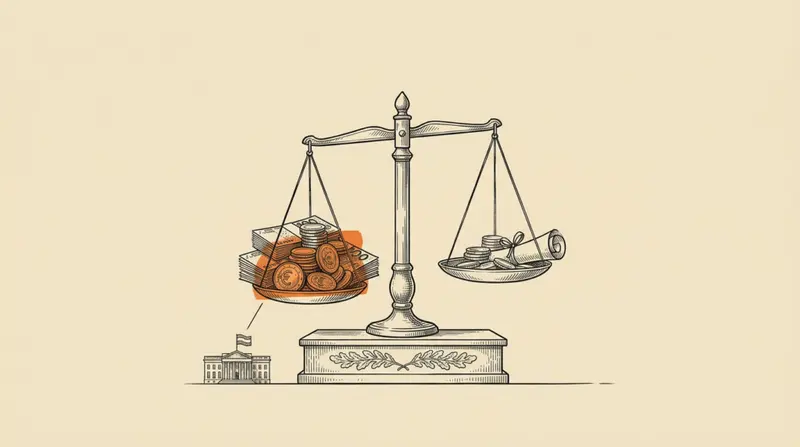
In a largely empty courtroom where the singer himself was not present, Friday brought a formal close to the financial aftermath of one of the most heavily publicised Dutch criminal cases in recent years. The district court awarded Marco Borsato €202,744.03 in compensation for expenses incurred during his criminal trial, as reported by NOS and regional media. That figure is substantially lower than the claim of over €434,000 submitted by his defence to the Dutch state in early November. The judge ruled that the case was substantively too straightforward for taxpayers to fully reimburse the deployment of two top defence lawyers at premium hourly rates.
Two Defence Counsel and 825 Billable Hours
The singer was represented by prominent Amsterdam defence duo Geert-Jan Knoops and Carry Knoops-Hamburger. That legal representation came with a substantial price tag, with hourly rates reported in court coverage at roughly €500 to €600 per hour. In total, the firm billed no fewer than 825 hours for substantive handling and preparation. As a result, approximately €389,000 of Borsato's initial claim consisted purely of legal fees. The remaining sums covered ancillary expenses: around €35,000 for retained expert witnesses, €7,000 for private security personnel who physically accompanied the singer during court days, and various smaller administrative and travel costs.
However, the Public Prosecution Service refused to accept the total bill. When discussions between prosecutors and the defence failed to reach an amicable settlement, the matter was referred to the court's in-chambers panel for a binding determination. During the oral hearing on 4 November, Borsato had already indicated that he would abide by the judge's ruling regardless of the outcome. That ruling ultimately went against his original claim, halving the requested amount.
The court justified the sharp reduction by describing the costs as conspicuously excessive. According to the judges, neither the complexity nor the factual scope of the criminal case file warranted such billing. The case involved an offence of a sexual nature with a relatively limited number of witnesses and investigative steps. The singer's decision to be flanked simultaneously by two senior defence barristers at every police interview and every court session was a personal strategy that, according to the bench, cannot automatically be borne by the public purse. Claims for external expert witnesses were likewise not awarded in full for similar reasons.
When discussions between prosecutors and the defence failed to reach an amicable settlement, the matter was referred to the court's in-chambers panel for a binding determination.
Full Acquittal with No Appeal
The legal basis for the application arose on 4 December 2025, when Borsato was fully acquitted by the court of indecent assault involving a minor. The allegations had been brought by the daughter of a former chairwoman of his fan club. The criminal court ruled at the time that the witness testimonies and submitted evidence lacked sufficient corroboration to secure a lawful and convincing conviction. Because the Public Prosecution Service subsequently decided not to lodge an appeal with the Court of Appeal, the verdict became final, irrevocably ending the criminal proceedings.
Under the Dutch Code of Criminal Procedure, the baseline principle is that a former defendant who is not convicted may file an application to recover incurred costs. Because the state initiated the prosecution through the public prosecutor and that prosecution resulted in no conviction, the law allows for the recovery of travel expenses, accommodation costs, damages for pre-trial detention, and defence costs. However, lawmakers attached an equity test to this mechanism: reimbursement is granted only to the extent that, in the court's opinion, equitable grounds exist.
Borsato's case illustrates how that equity test works in practice for wealthy defendants. Anyone with the financial means to retain renowned counsel for hundreds of hours of case review is entitled to do so. Yet case law sets firm boundaries on what the public treasury must subsequently reimburse. The ruling draws a clear line between what is strictly necessary for an adequate defence on the one hand, and what constitutes a luxury legal entourage on the other. The judge's characterisation of the case as relatively straightforward underscores that intense media scrutiny does not, by itself, make a case legally complex.
What This Mechanism Means for Dutch and Belgian Observers
For citizens and businesses in both the Netherlands and Belgium, this ruling highlights a fundamental difference in how the two legal systems treat criminal defence costs. In the Netherlands, the state has paid out €173 million in compensation to former defendants in recent years under this statutory framework, according to figures from EenVandaag. This involves thousands of cases each year in which citizens wrongfully brought before a criminal court can recoup at least part of their financial damage from the Ministry of Justice and Security.
While this system provides a vital safety net for Dutch defendants, the Borsato ruling also highlights the severe financial risks involved. Anyone engaging top counsel at hourly rates of €500 or more will, even upon acquittal, still shoulder a considerable portion of the bill if the court trims billable hours. In this specific case, Borsato remains personally liable for an outstanding balance of over €231,000 in unrecovered defence costs, excluding reputational damage and lost earnings across years of investigation.
For Belgian observers, the contrast with their domestic legal framework is stark. In Belgium, criminal proceedings do feature a procedural indemnity—a flat-rate contribution towards legal costs—but these amounts are statutory caps set at a fraction of actual legal fees. An acquitted defendant in Belgium can recover actual legal fees in full from the state only under exceptional circumstances, specifically by initiating separate civil liability proceedings based on a fault committed by the judiciary or investigating authorities. The Dutch system is therefore considerably more generous to acquitted individuals, even as judges strictly safeguard public finances through reasonableness assessments.
What the Block #9 Newsroom Is Watching
The ruling marks the definitive end to judicial proceedings surrounding the singer, but it opens a wider public debate on the sustainability of legal cost reimbursements. With the Dutch state setting aside tens of millions of euros annually for such compensations, debate is growing within the legal profession over introducing fixed guidelines or standardised hourly rates for post-acquittal fee claims. This judgment is likely to serve as precedent to curb disproportionate billing schedules from specialist defence firms in future criminal proceedings.
With the award of €202,744, the criminal chapter is closed for the Dutch state. The question that remains for legal practice is where the line between a straightforward and a complex case will be drawn in future, particularly where public pressure and media scrutiny surrounding a defendant are overwhelming, yet the statutory evidence remains exceedingly thin.
- Advocaten
- Carry Knoops
- Geert-Jan Knoops
- justitie
- Marco Borsato
- netherlands
- Openbaar Ministerie
- rechtbank
- Schadeloosstelling
- Strafrecht

Written by
Amina El Yazidi
Tax Editor · Brussels (BE)
Expertise
Amina follows tax rules around crypto in the Netherlands and Belgium. She translates fiscal legal texts into practical steps for retail investors.
Related articles
- Up to Two Years in Prison for Three Dutch Nationals After Theft of EV Charging Cables at 23 Stations
- Inmate Throws Boiling Sugar Water at Fellow Prisoner, Sentenced to Three Years in Prison
- Diplomatic Pressure Failed, but the Netherlands Hopes €2m Bounty Will Catch 'Bolle Jos'
- Prosecutors Demand Prison Term but Judge Gives Habitual Offender House Arrest and Lifetime Driving Ban
- Evergrande Founder Receives Life Sentence and Forfeits All Assets
- Man Sentenced to Three Years in Prison for Theft and Threats in Leuven
Stay in the loop
Follow Block #9.
Daily market and equity news in your feed. Follow us on Facebook and Instagram so you never miss an analysis.
Practice without real money or test your knowledge?
Read more