
FDA Clears Neuralink for Pivotal Brain Implant Study
Block #9
FDA Clears Neuralink for Pivotal Brain Implant Study
In 4 slidesThe gist of this article, fast
- 01
FDA clears Neuralink for pivotal brain implant study
Following trials involving thirty patients, Elon Musk's neurotechnology firm has received clearance to launch a formal registration study for its N1…
BLOCK #9 · block9.net - 02
FDA clears Neuralink registration study
On Wednesday 25 November 2026, the agency greenlit the LINK study. The trial focuses on adult ALS patients to pursue commercial approval.
BLOCK #9 · block9.net - 03
More than 30 patients receive the hardware
Noland Arbaugh received the first implant in January 2024. Neuralink now reports that more than 30 patients are functioning with the device.
BLOCK #9 · block9.net - 04
Science Corporation raises 400 million dollars
Science Corporation, led by former Neuralink executive Max Hodak, raised 400 million dollars this month to advance its PRIMA retinal implant.
BLOCK #9 · block9.net
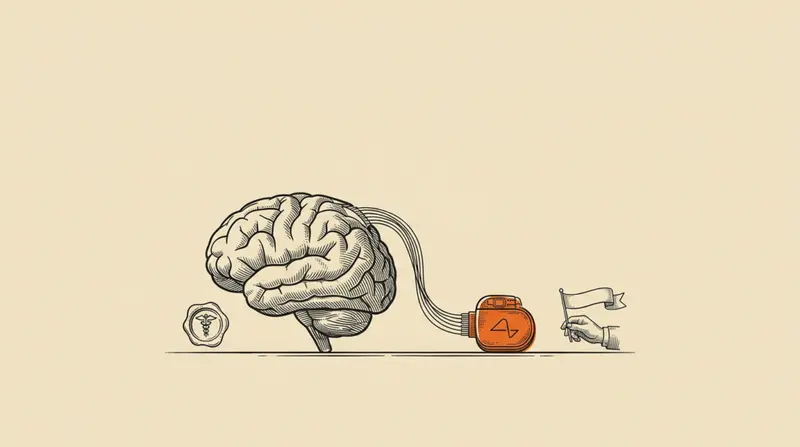
Following trials involving thirty patients, Elon Musk's neurotechnology firm has received clearance to launch a formal registration study for its N1 brain implant.
When does a futuristic brain implant evolve from a daring laboratory experiment into an approved medical device that physicians can prescribe? The US Food and Drug Administration (FDA) has officially set that transition in motion for Neuralink by greenlighting the LINK study. It marks the very first pivotal trial in the United States for an implantable brain-computer interface, Elon Musk's company announced on Wednesday 25 November 2026. With this move, the firm leaves the exploratory phase behind and embarks on the path intended to culminate in commercial approval for patients suffering from amyotrophic lateral sclerosis (ALS).
The transition from experimental trial to registration study
In clinical medicine, the term ‘pivotal’ carries a very precise meaning. While earlier clinical trials primarily investigate whether an intervention is technically feasible and safe enough to avoid immediate harm, a pivotal study represents the final pillar of a scientific dossier. It provides the formal evidence required by the US FDA to grant Premarket Approval for the highest-risk category of medical devices. For Neuralink, this shifts the central question from ‘does transmitting brain signals to a display work?’ to ‘does the system perform with sufficient clinical reliability to serve as a permanent assistive device?’.
The company's N1 implant comprises 1,024 microscopic electrodes distributed across 64 flexible threads that are thinner than a human hair. A specialised surgical robot, the R1, inserts these electrodes with extreme precision into the motor cortex of the brain, specifically targeting the area controlling hand movements. Once implanted, the device reads the electrical signals of neurons whenever a patient imagines moving a hand or finger. This neural activity is transmitted wirelessly to external software, which translates thought into concrete digital actions: moving a mouse cursor, executing left- or right-clicks, and ultimately typing sentences.
Neuralink has not yet fully disclosed the exact design of the LINK study. The precise cohort size, participating hospitals, and formal clinical endpoints have yet to be published in the central registry at ClinicalTrials.gov. However, the trial will focus squarely on adult patients with ALS, a progressive neurodegenerative disease in which motor neurons gradually perish. As with prior trials, the company is covering all costs associated with the implant, the surgical procedure, and participant travel, keeping the financial threshold for patients at zero euros.
From animal models to more than thirty human recipients
Regulatory approval has not arrived out of the blue; it builds on significant momentum initiated eighteen months ago. In May 2023, following earlier rejections, Neuralink secured its first Investigational Device Exemption from the FDA. That milestone led to the first human implantation in January 2024, involving Noland Arbaugh as part of the PRIME study. That initial trial targeted roughly 15 participants living with high-level quadriplegia and demonstrated that a paralysed user could operate a computer using thought alone, although technical complications surfaced during the initial weeks when several electrode threads partially retracted from brain tissue.
The company has accelerated its pace substantially since then. By early 2026, the firm counted 21 implanted participants across clinical sites in the United States, Canada, the United Kingdom, and the United Arab Emirates. By mid-2026, the tally reached approximately 26 procedures, and alongside the announcement of the LINK study, Neuralink reported that more than 30 patients are now functioning with the hardware. Earlier this month, the company also registered PRIME2, a ten-person feasibility trial featuring the University of Miami hospital among its research locations.
By shifting focus specifically to ALS patients, Neuralink is consciously entering more demanding medical territory. While a spinal cord injury represents a relatively stable lesion, ALS is characterised by relentless deterioration of muscle strength and speech capability. We view this choice as the ultimate stress test for the software algorithms, as the system must continuously adapt to a brain whose neural signalling network is steadily degrading. Should the technology succeed in preserving digital autonomy for patients well into the advanced stages of their illness, Neuralink will hold clinical evidence that will be difficult to ignore commercially.
By early 2026, the firm counted 21 implanted participants across clinical sites in the United States, Canada, the United Kingdom, and the United Arab Emirates.
Winners and losers in the neurotech race
While Neuralink commands the lion's share of public attention courtesy of Elon Musk, it by no means operates in a vacuum. The transition to a pivotal study substantially reshuffles the deck across the emerging neurotechnology sector. Among the immediate beneficiaries are patient groups and ALS advocacy organisations. They have campaigned for years for expedited access to neural prostheses, given that the window between diagnosis and complete loss of communication is often painfully narrow. For these communities, a formal FDA trial signals that the technology has moved well past the realm of internet demonstrations.
At the same time, this step piles pressure on private competitors. Ventures such as Synchron—which delivers a brain electrode through the vascular system without open cranial surgery—and Science Corporation must now prove their approaches offer a viable alternative. Tellingly, Science Corporation, founded by former Neuralink executive Max Hodak, raised 400 million dollars this month, equivalent to roughly 370 million euros. That funding round valued the company at roughly 3.2 billion euros and was primarily earmarked for the development of its PRIMA retinal implant. Capital flows into this niche remain abundant, yet Neuralink is staking an early claim to the lead in direct cortical implants.
There are clear laggards as well: firms that anchored their roadmaps to non-invasive interfaces, such as electroencephalography (EEG) headsets, are watching their perceived technological lead in signal resolution evaporate. A scalp-level sensor simply cannot match the fidelity of a thousand electrodes positioned directly against the cerebral cortex. Companies unable to marry surgical precision with exceptionally stable wireless data transmission risk finding themselves sidelined in the medical arena.
Implications for European investors and medtech pioneers
For savers, venture capital funds, and equity investors across Belgium and the Netherlands, neurotechnology might initially appear to be a distant Silicon Valley spectacle. Yet this milestone directly touches the European innovation landscape. The Benelux is home to premier research clusters around the Leuven-based institute imec and Eindhoven University of Technology, both world-renowned centres of excellence in bioelectronics, microchips, and microsensors. European suppliers of biocompatible materials and ultra-precise microelectronics are already seeing heightened demand from US frontrunners.
For retail investors, direct access to this market remains restricted. Neuralink is a privately held enterprise, meaning investment rounds have thus far been reserved for specialised venture capitalists and insiders. European investors seeking exposure to the theme must largely turn to broader medtech ETFs or publicly listed technology conglomerates holding stakes in AI-driven diagnostics and surgical robotics. The risk profile, however, diverges sharply from standard technology equities: clinical trial timelines typically span two to five years, and a single severe medical adverse event can wipe out a multi-billion-euro valuation overnight.
Furthermore, a considerable regulatory gap separates the United States from Europe. While the FDA deploys targeted pilot schemes to accelerate medical innovation, approvals within the European Union run through the rigorous Medical Device Regulation (MDR). European start-ups routinely voice frustration that domestic clinical trials take far longer to launch due to administrative fragmentation. Should LINK succeed, an approved implant risks becoming standard care in American hospitals while European patients face years of waiting for conformity assessments from notified bodies.
The counter-thesis and clinical pitfalls
Caution remains warranted despite Neuralink's upbeat announcements. A pivotal trial is no guarantee of regulatory clearance; it is an assessment that can just as easily falter. Substantial technical and biological hazards could derail the entire programme, and the history of medical implants demonstrates that human biology is an unforgiving counterpart.
- Signal degradation via tissue response: The human brain responds to foreign bodies by forming a microscopic layer of glial scar tissue, which over months can degrade electrode signal fidelity.
- Mechanical instability: Delicate threads shift alongside pulsating cerebrospinal fluid, creating the risk that electrodes detach from target neurons—a phenomenon that caused performance losses in the first patient.
- Long-term infection risks: Although the N1 device sits flush beneath the scalp and charges inductively, any invasive cranial procedure entails enduring risks of infection or rejection.
- Ethical and data privacy concerns: Continuous extraction and processing of neural data raises profound dilemmas regarding data security and who governs software updates for an individual's cognitive interface.
What presents the strongest counter-argument to the narrative of an imminent breakthrough? It is the lack of independent, peer-reviewed scientific literature detailing earlier trials. To date, Neuralink has disseminated its findings largely through social media livestreams and company presentations. We see clear tension between the firm's commercial communications style and the exacting standards of medical science. A complication rate exceeding 10 per cent during thread placement, or a measurable deterioration in signal transmission within the 24-month follow-up window, would immediately challenge our view regarding near-term commercial viability.
Two scenarios for the implant's future
With the clinical clock now ticking, two distinct trajectories emerge for Neuralink and its N1 system over the next three to five years.
Under the bull scenario, patient recruitment across leading US university medical centres proceeds smoothly. The R1 surgical robot places the electrodes without major adverse events, and signal processing remains stable across the entire follow-up period. Along this path, the trial demonstrates convincingly that paralysed patients can preserve their communication and employment capabilities at an acceptable level of risk. The FDA subsequently grants Premarket Approval around 2028 or 2029 for medical use in severe motor impairment. From that juncture, Neuralink could pivot into a profitable medtech entity eligible for healthcare insurance reimbursement, clearing the way for broader indications such as vision or speech restoration.
The bear scenario paints a far more arduous road. Recruiting suitable ALS candidates proves sluggish because rapid disease progression complicates timely surgical intervention. During the trial, foreign-body reactions in multiple subjects encapsulate or displace the flexible threads, causing cursor accuracy to deteriorate sharply. In response, the FDA demands additional safety studies and hardware redesigns, prolonging the timeline by years and consuming hundreds of millions of euros in additional capital. Under these conditions, the project risks becoming mired in an extended clinical stalemate.
Regardless of the outcome, clearance for the LINK trial marks the close of the brain implant's initial exploratory chapter. The era of lofty promises and viral demonstrations must now yield to controlled hospital wards, statistical significance, and rigorous regulatory scrutiny. Whether a computer chip in the brain becomes a mainstream medical reality will not be settled on a demonstration stage, but within the regulatory archives over the years ahead.
- ALS
- Biotechnologie
- elon musk
- fda
- Healthcare
- Medtech
- N1 Implantaat
- Neuralink
- Science Corporation
- United States

Written by
Fleur de Wit
Banking editor · Rotterdam (NL)
Expertise
Fleur writes about banks, payments, and the digital euro. She investigates what ECB policy means for account holders and fintechs.
Related articles
- Ruconest Shortage Looms in the United States as Pharming Halts Production
- Science Corp raises €380 million for European eye implant
- Bioxytran Paves Way to Arabian Gulf with Clearance for Sugar Supplement
- Regulator Halts Nyxoah Trading Following 2026 Revenue Guidance Cut
- First Tracks Biotherapeutics Shares Rise After Double Buy Rating
- Tyra Biosciences Shares Plunge 31% After Bladder Cancer Study Disappoints
Stay in the loop
Follow Block #9.
Daily market and equity news in your feed. Follow us on Facebook and Instagram so you never miss an analysis.
Practice without real money or test your knowledge?
Read more




