Bitcoin Post Scammers Ordered to Repay X a Quarter of a Million Euros
Crypto News
Bitcoin Post Scammers Ordered to Repay X a Quarter of a Million Euros
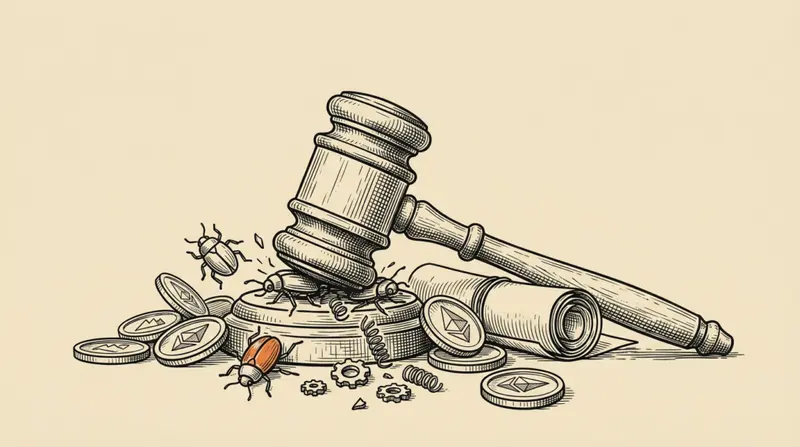
Two defendants failed to appear in court after siphoning funds from Elon Musk's advertising programme with automated cryptocurrency posts.
Can a handful of clever programmers plunder Elon Musk's advertising programme with impunity by swamping the platform with automated posts about cryptocurrencies? The US courts have answered with a firm no: social media platform X has secured a default judgment against two operators of an extensive bitcoin content farm, in a case centred on an amount of 271,000 dollars, roughly 258,000 euros. Because the defendants simply failed to appear to defend themselves, the judge granted the claim in default to the platform. Owner Elon Musk seized the opportunity to issue a clear warning to the world, stating laconically that no one should mess with his platform.
How Automated Networks Attempted to Milk X's Creator Rewards System
To understand how this fraudulent scheme came about, one has to look back at the revenue model Musk introduced shortly after taking over. X launched a programme allowing verified accounts to receive a share of the advertising revenue generated under their posts. The principle behind this ad-revenue sharing sounds noble: active creators who spark genuine engagement are rewarded financially for the time users spend on the platform. However, that quickly invited a very different kind of entrepreneurship. Wherever money can be made from attention, parties inevitably emerge trying to fabricate that attention artificially.
In this particular lawsuit, the case revolved around a so-called content farm. This is an automated network of accounts operating according to a fixed routine. Software generates posts continuously and directs other accounts to reply en masse. Known as engagement farming, this network deceives the algorithm. By feigning tens of thousands of automated interactions per hour, the profiles appeared exceptionally popular with the wider public. The algorithm then served the posts to unsuspecting users, with advertisements displayed right beneath them. As a result, ad payouts flowed into accounts managed entirely by scripts and bots.
The choice of bitcoin as a topic was by no means accidental. Posts about digital assets traditionally trigger intense emotions, from euphoria to panic, making users far more prone to click through or reply indignantly. The defendants knew that the threshold for collecting ad revenue is tied to impressions from premium, paying users. By having a web of verified accounts reply to each other's crypto posts, they engineered a closed loop in which virtual revenue was generated without a single human thought involved. That the operators have now suffered a default judgment demonstrates that the virtual loot brings a heavy legal hangover.
Pressure on Advertising Margins and Musk's Financial Reality
For X, which has grappled with declining ad revenues and stringent cost-cutting since Musk took over, every dollar paid out in advertising rewards directly affects operational margins. If automated networks manage to siphon off 271,000 dollars in payouts without real human engagement, it not only undermines the return on the ad programme, but also drives away advertisers paying for genuine human attention. Above all, we see X desperately seeking a balance between attracting creators and safeguarding its increasingly squeezed advertising budget.
Posts about digital assets traditionally trigger intense emotions, from euphoria to panic, making users far more prone to click through or reply indignantly.
Musk regularly reiterates that his ultimate goal for X is to make user minutes as valuable as possible, a concept he describes as maximising unregretted user time. Automated low-quality posts detailing price spikes run diametrically counter to that philosophy. Advertisers are hesitant to tie their brands to timelines rife with spam. When companies realise their marketing budgets are flowing to automated profiles rather than real consumers, they pull out for good. For a multi-billion-dollar company, recovering these 258,000 euros is a drop in the ocean financially, but strategically it is a vital demonstration of control.
The size of the sum is notable when set against other cases surrounding Musk's business empire. The disputed figure of 271,000 dollars sits remarkably close to the 315,000 dollars that a federal judge in Maryland invested at minimum in SpaceX stock, according to recent disclosures, while that same judge was presiding over cost-cutting cases involving Musk. That same magistrate also held Dogecoin valued at 15,000 dollars or less. While such amounts frequently surface in US courts, this lawsuit from X proves that Musk is willing to go to great lengths even for relatively modest claims to set a precedent.
Nervous Crypto Markets as Fertile Ground for Post Farms
The crypto-spam phenomenon thrives especially when the market is under high tension and investors grasp at every snippet of news. Our own market data, recorded on 24 November at 17:29, shows just how bleak sentiment currently is: bitcoin is trading at 54,415 euros, a 5.4 per cent loss in 24 hours and a sharp drop of 25.8 per cent over the past thirty days. The fear and greed index, meanwhile, stands at a chilling 13 out of 100, indicating extreme fear. Total crypto market capitalisation fell by 7.1 per cent to 1.89 trillion euros.
In such harsh market conditions, content-farm operators seek to capitalise on uncertainty. Posts featuring sensational predictions of sudden price rallies or looming crashes generate considerably more interaction than level-headed analysis. The audience is nervous, looking for guidance, and quicker to click on misleading promises. The defendants' revenue model fed on that exact human psychology: automated accounts continuously blasted out alarming or wildly optimistic price posts to trigger reactions from anxious investors watching their portfolios shrink.
Musk himself has a long and turbulent history with cryptocurrencies, notably Dogecoin, over which he previously faced a lawsuit alleging market manipulation to the astronomical tune of 258 billion dollars. That case was ultimately dismissed by the court, but it underlines the degree to which his platform has become intertwined with the crypto debate. We believe this recent legal victory against the content farm is primarily designed to demonstrate that X will no longer tolerate the exploitation of those crypto dynamics on its own turf.
What This Ruling Means for Genuine Creators in Belgium and the Netherlands
For creators in Belgium and the Netherlands attempting to earn an honest living on the platform, the default judgment brings mixed feelings. On the one hand, it is encouraging to see fraudulent networks tackled; on the other, local creators are feeling the pinch of tightened policies. Anyone based in Flanders or the Netherlands producing content on investing, technology or finance is finding it increasingly difficult to compete with aggressive overseas algorithms.
Indeed, the crackdown on content farms introduces several concrete changes for legitimate users:
- Verification requirements: X is steadily raising the thresholds for admission to its advertising programme, leaving new creators waiting much longer for approval.
- Stricter monitoring: interactions flagged as suspicious by automated filters are immediately stripped from ad-revenue calculations.
- Lower payouts: as the platform sets aside funds for legal proceedings and fraud prevention, the total pool available for distribution contracts.
- Liability risks: creators using automated scheduling tools face a higher risk of being mistakenly flagged as spammers.
A default judgment does not mean, of course, that X will see the awarded 258,000 euros in its bank account tomorrow. In default rulings, the opposing parties are often untraceable or unwilling to pay. In practice, tracking down and seizing assets from anonymous online fraudsters is frequently a legal maze that can drag on for months or years. The question therefore remains how much of those proceeds will ever make its way back to San Francisco, and to what extent automated networks will simply shift their tactics to smarter, less conspicuous algorithms.
- advertenties
- bitcoin
- dogecoin
- elon musk
- fraud
- rechtszaak
- Sociale Media
- Spam
- United States

Written by
Lieke van Dijk
Tech editor · Utrecht (NL)
Expertise
Lieke writes about blockchain technology, AI, and security. She tests protocols and wallets herself and explains why a technical choice matters to users.
Related articles
- US Launches Crypto Fraud Crackdown Across More Than 400 Criminal Cases
- Why CleanSpark Now Plans to Sell More Bitcoin Than It Actually Mines
- PowerCompute Sells 267 Bitcoin to Clear Debt With No Guarantee of Survival
- FTC Sues Amazon Over Billions in Hidden Advertising Fees
- Verizon and T-Mobile Settle Advertising Disputes, Campaign Not to Return
- European Commission Aims to Raise Social Media Minimum Age from 13 to 15
Stay in the loop
Follow Block #9.
Daily market and equity news in your feed. Follow us on Facebook and Instagram so you never miss an analysis.
Practice without real money or test your knowledge?
Read more