
Bank Fraudsters Refine Attacks With Artificial Intelligence and Personal Data
European Banking News
Bank Fraudsters Refine Attacks With Artificial Intelligence and Personal Data
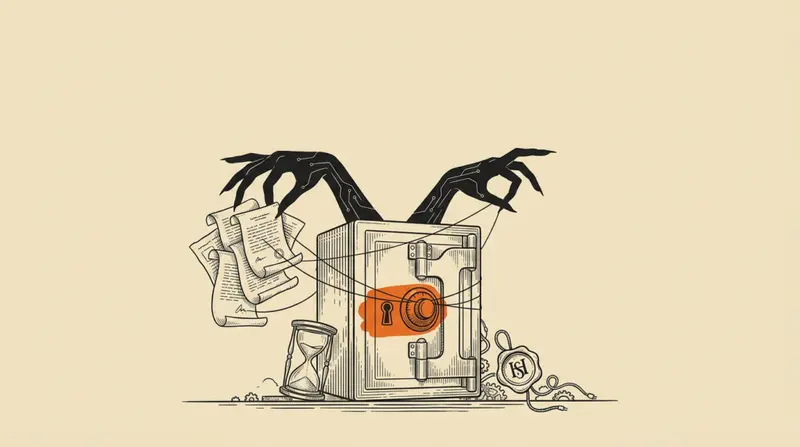
Following losses of nearly €26 million, banks and the Dutch Fraud Help Desk are warning of phone scammers manipulating victims over several days.
Bank fraudsters stole almost €26 million in the Netherlands last year, according to figures from the Dutch Banking Association (NVB), highlighting just how lucrative targeted psychological manipulation remains. While criminals previously settled for hastily written phishing emails littered with spelling mistakes, they now deploy artificial intelligence and leaked personal data to keep victims on the phone for days. Recent research by banking giant ING also reveals that 46 percent of consumers have encountered fraud or a concrete attempt at it. The traditional confidence trick has evolved into a technical and psychological duel that catches out even seasoned account holders.
Their approach has long ceased to rely on chance. Following a series of recent cyber incidents that saw vast amounts of names, phone numbers and email addresses leaked, malicious actors now possess detailed profiles before they dial. The Fraud Help Desk points out that while establishing a direct legal causal link to specific data breaches is difficult, stolen data undeniably enables criminals to present an alarmingly convincing front. Anyone called by someone who already knows their full name, date of birth and account details is far quicker to dismiss internal alarm bells.
Kept Psychologically Hostage on the Line for Days
The approach via telephone is both sophisticated and calculated. Marco Hendriks, a fraud expert at ABN AMRO, describes the dynamic as a psychological hostage situation, with criminals calling at times when people tend to let their guard down. Posing as helpful staff from the bank's security department or the Fraud Help Desk, their tone is invariably friendly, professional and patient. Some victims are kept on the line for hours, or even across two consecutive days, as fraudsters steer them step by step towards transferring their savings.
To dispel suspicion, scammers deploy 'spoofing', a technique that displays the bank's legitimate customer service number on the recipient's screen. They then fuel panic with plausible stories, such as an alleged wave of burglaries in the victim's neighbourhood or suspicious foreign transactions. The only way to safeguard their funds, the narrative goes, is to move the balance temporarily into a 'secure vault account'. Under intense time pressure, victims effectively wire their own wealth directly into accounts managed by money mules.
Marco Hendriks, a fraud expert at ABN AMRO, describes the dynamic as a psychological hostage situation, with criminals calling at times when people tend to let their guard down.
Above all, the increasing refinement of these scams exposes a structural issue in the relationship between banks and consumers. For years, account holders were assured that digital identification and two-factor authentication protected them against theft, yet software provides no watertight defence against determined manipulation. As confirming online transfers became increasingly frictionless, fraudsters singled out human behaviour as the most vulnerable link. Recent loss figures show that traditional public awareness campaigns simply lag behind reality as long as payments settle irreversibly within seconds.
Attack Vectors Shift Towards Direct Messaging
Data from ING clearly illustrates the avenues criminals use to target account holders. While phone calls account for 36 percent and generate the most acute psychological pressure, the initial touchpoint is often digital. Short messaging services and chat apps top the list:
- Messaging services: SMS and WhatsApp represent the most frequently reported attack vector, accounting for 42 percent of scam attempts.
- Email: Traditional phishing messages make up 39 percent of reported fraud attempts.
- Phone calls: Direct voice calls follow at 36 percent, though they typically cause the largest financial losses per incident.
The rise of artificial intelligence has made written communications especially hard to detect. Where fraudulent emails once stood out due to awkward phrasing or erratic punctuation, large language models now generate flawless copy that mirrors a financial institution's precise tone and style. The danger no longer stems from glaring spam, but from messages that blend seamlessly into legitimate banking activity or recent news regarding payment cards and security updates.
Impact on Account Holders and the Legal Fallout
For consumers across the Benelux, this escalation has direct consequences for day-to-day banking. The notion that such schemes affect only vulnerable elderly citizens or those with limited digital skills is a dangerous misconception, according to Aniek Berendsen, Director of Fraud at ING Netherlands. By preying on acute panic and trust in one's own bank, fraudsters ensnare a broad cross-section of the population. Once victims realise they transferred the funds themselves, the emotional and financial toll is severe.
At the same time, the legal balance between banks and defrauded customers is shifting. Financial institutions invest heavily in fraud detection, though they guard specific budgets closely. While banks previously refused compensation on grounds that victims acted with 'gross negligence' by authorising transfers themselves, the courts increasingly demand leniency. Supervisory authorities and judges take the view that banks must enhance their duty of care as criminal methods grow more professional. This is compelling lenders to overhaul their systems with stricter limits and built-in delays for suspicious transactions.
How Banks and Supervisory Authorities Are Responding
The financial sector faces a delicate balancing act. On one hand, consumers expect a seamless, ultra-fast digital experience where payments clear instantly. On the other, that very speed provides the ideal cover for criminals to launder stolen funds within minutes across foreign intermediary accounts or crypto platforms. Once the capital has been funnelled away, police services are largely powerless.
In our view, the sector will inevitably have to introduce greater operational friction in the short term to protect consumers from themselves. Potential measures include mandatory cooling-off periods when an account holder abruptly raises their daily limit, or automatically pausing substantial transfers to unfamiliar payees until verified over the phone via an authenticated channel. For account holders, this will inevitably compromise convenience, but it erects a vital barrier against persuasive scammers.
The golden rule remains straightforward, even if maintaining it in practice proves difficult: a bank will never call asking a customer to transfer money to another account, disclose security PINs, or assist with external security tests. Anyone who feels the slightest hesitation during a call should hang up immediately and dial the bank's official customer service number directly. Over the coming months, the key question is whether lenders can continue placing this burden onto individual citizens, or whether supervisory authorities will step in with mandatory technical safeguards.
- ABN Amro
- Artificial Intelligence
- Bankfraude
- Consumentenbescherming
- cybercrime
- Fraudehelpdesk
- ING
- nederland
- spaarrekeningen
- Spoofing

Written by
Sanne Vermeulen
Market editor · Amsterdam (NL)
Expertise
Sanne monitors crypto markets, ETF flows, and institutional inflows in Europe. She previously wrote about capital markets and translates market data into understandable stories.
Related articles
- Pensioenfonds ING Shifts Interest Rate Hedging Mandate to Achmea Investment Management
- ABN AMRO Joins €10 Billion European Tech Initiative Today
- JPMorgan Appoints Dutch Banker Bregje de Best as New Chief Financial Officer
- Banks Must First Reimburse Customers After Fraud, Even in Cases of Negligence
- Rabobank Increases Savings Interest Rate to 1.6 Percent for Smaller Amounts
- Banks Must Immediately Reimburse Phishing Victims, Rules European Court
Stay in the loop
Follow Block #9.
Daily market and equity news in your feed. Follow us on Facebook and Instagram so you never miss an analysis.
Practice without real money or test your knowledge?
Read more
Other interesting articles

CFTC Approves Backpack, Granting Trading Platform Access to US Derivatives Market
- 02Major Banks Now Settle Bonds Round the Clock on Digital Network in Hong Kong

- 03Where Analysts Expected Profit, Henry Boot Suddenly Plunges Millions into the Red

- 04Ethereum Chooses Tried-and-Tested Security While Everyone Expected Faster Quantum Hashes

- 05Brussels Scales Up to €50 Billion for Quantum Technology and Artificial Intelligence
